If you’ve ever loved a boot online, then felt that familiar pinch halfway up your calf, you’re not alone. Wide-calf boots that actually fit are out there—you just need a clearer shopping plan than “hope this size chart is honest.”
This guide is for plus-size women, pear shapes, and anyone whose calves need more room than a standard shaft. If you live with lipedema or simply have fuller lower legs, the fit tips here are about clothes and shoes that meet you where you are.
Why so many boots fail at the calf
Most boot shafts are drafted for a narrower calf circumference. When your calf is fuller—or when your thigh and calf both need room—the boot can feel fine at the ankle and then stop halfway up. Stretch panels help, but they aren’t magic if the base circumference is too small.
The fix isn’t “buy a bigger shoe size.” A larger foot length doesn’t automatically mean a wider shaft. What you want is a boot labeled wide calf, extra-wide calf, or one with a published shaft circumference you can compare to your own measurement.
Measure once, shop with confidence
Grab a soft tape and stand with your weight on both feet. Measure the widest part of your calf—usually the fullest curve of the muscle. Keep the tape snug, not digging in. Write the number in inches (and centimeters if you like).
Also note:
- Calf height: from the floor (or from the top of a sock you’d wear) to where you want the boot shaft to end.
- Ankle circumference: helpful for slim shafts that still need pull-on room.
- Shoe size and width: your usual length plus any wide/wide-width needs at the foot.
Compare your calf number to the brand’s shaft circumference, not only the letter size. If a brand lists “wide calf 17–18 inches” and your calf is 18.5, look for extra-wide, stretch, or a style with a zipper that opens the shaft fully. Our free Measuring Guide walks through calf, thigh, hip, and inseam the same way every time.
What to look for when you shop
1. Published shaft measurements
The best product pages list shaft circumference and shaft height. Screenshots and reviews that say “fits a 16-inch calf” are helpful clues, but a brand chart beats a guess. If measurements aren’t listed, message the seller before you buy—or skip it.
2. Stretch, gore panels, and full-length zippers
Elastic gores, stretch back panels, and zippers that run the full shaft give you entry room and daily comfort. Pull-on riding boots with zero stretch are the hardest category for fuller calves unless they’re explicitly wide-calf.
3. Heel height and toe shape you’ll actually wear
A gorgeous heel that lives in the box doesn’t help. Choose a block heel or low wedge you can walk in for errands, church, or travel. Rounded or almond toes usually feel kinder than sharp points when you’re on your feet longer.
4. Materials that give a little
Soft leather, quality faux leather with stretch lining, and knit or stretch-shaft styles break in more kindly than stiff, unrestructured synthetics. If a boot feels board-stiff in photos of the shaft, assume it won’t bloom much at the calf.
Style formulas that flatter fuller calves
Fit first, then style. Once the shaft closes without a fight, these easy formulas keep the look polished:
- Straight or wide-leg pants + ankle boot: the pant hem skims the top of the shaft so nothing fights for space.
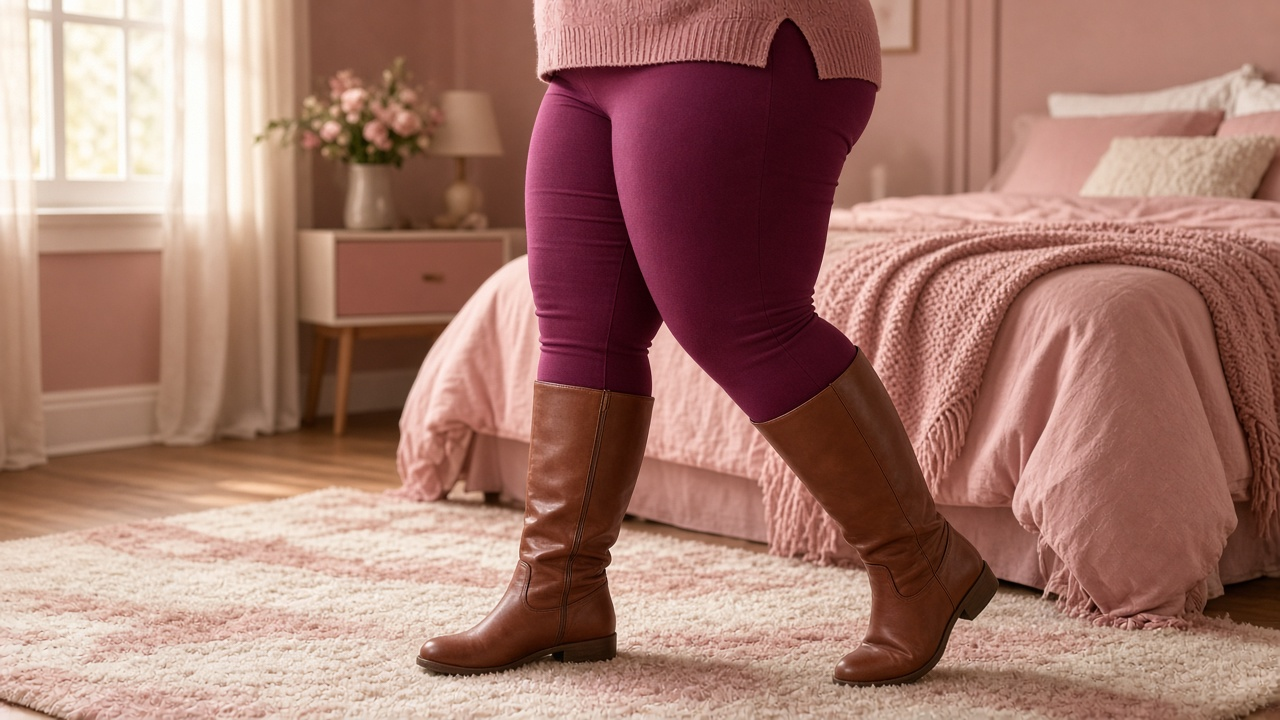
- Soft stretch jegging + riding boot: tuck or stack lightly; avoid rigid skinny denim that bunches in the shaft.
- Midi skirt + flat or low block boot: a clean line from skirt hem to boot top feels intentional and comfortable.
- Sock boot with stretch shaft: great under cropped pants when you want less bulk at the ankle.
Darker shafts and continuous color from pant to boot create a longer line. A cognac or warm brown boot against berry, navy, or soft black bottoms looks rich without trying hard—very FittedJoy.
Shopping checklist (save this)
- Know your widest calf measurement (and shoe size/width).
- Filter for “wide calf” or read shaft circumference on the product page.
- Prefer stretch panels or a full zipper when your calf is near the top of a size range.
- Check return policy before you click buy—try-on at home is part of smart shopping.
- Wear the socks you’ll actually use when you test the fit.
Here’s what Karrie is trying on for real-world wide-calf shopping (she wears a women’s 10.5 EEE, and standard boots almost never clear her calves). These are shopper notes, not guarantees—always match your own calf measurement to the brand’s shaft chart and use a generous return window:
- Luoika Women’s Extra Wide Calf Knee-High Boots — Extra-wide-calf knee-highs with a published shaft circumference (~18 in) and a low block heel; side zipper + memory foam. A first stop when regular “wide calf” still pinches halfway up.
- Luoika Women’s Extra Wide Calf Knee High Boots — Extra-wide-calf knee-highs with stretch/elastic give (~17.7 in shaft listed). Think riding-boot energy with more room through the calf; confirm the stretch panel location on the listing photos.
- Luoika Women’s Extra Wide Width Ankle Boots — Extra-wide-width ankle boots with a side zipper. Note: the listed heel is mid (~3.15 in), not low, so if you need a flatter walk, check the heel height before you buy.
When you’re ready to build a full outfit around boots that fit, watch our Lookbooks for everyday bundles with these pieces styled in.
A note for lipedema legs (fit only)
Many women with lipedema describe legs that need more room at the thigh and calf than standard sizing expects. That lived fit challenge is why FittedJoy centers measurements—not shame. Style choices that often feel better include stretch shafts, zip entry, and bottoms that don’t clamp the calf when tucked.
FAQ
Should I size up in boots to get more calf room?
Usually no. A longer boot can slip at the heel without solving shaft circumference. Look for wide-calf labeling or stretch instead.
What calf measurement counts as “wide calf”?
It varies by brand. Some “wide” shafts start around the mid-teens in inches; others go higher. Always match your number to their chart.
Are stretch boots durable?
Quality stretch panels and well-made zippers hold up well for everyday wear. Avoid ultra-cheap foam shafts that collapse or tear at stress points.
Can I wear boots with lipedema-friendly compression garments?
That’s a personal comfort and care-team question. From a fit view only: measure over whatever you plan to wear inside the boot, and choose a shaft with enough give so nothing binds.
Free measuring guide + FittedJoy newsletter
Want the printable version of how we measure calf, thigh, hip, waist, and inseam? Visit the Measuring Guide and join the FittedJoy list when the signup is live. You’ll get fit tips and lookbook notes—warm, practical, and never shaming.
Optional: jewelry to finish the look
Want personalized jewelry styling to go with your boots-and-denim days? Take the jewelry style quiz or request a Style Me session.
Disclosure: When shopping links appear on FittedJoy, some may be affiliate links. We may earn a small commission if you purchase—at no extra cost to you. We only recommend pieces we’d be glad to wear ourselves. FittedJoy.com is a participant in the Amazon Services LLC Associates Program, an affiliate advertising program designed to provide a means for sites to earn advertising fees by advertising and linking to Amazon.com.
A gentle note: FittedJoy shares fit and style tips, not medical advice. For lipedema information, see the Lipedema Foundation or the NHS lipoedema page.